The deepest evidence base we have — a forty-month Queensland trial against a registered fungicide programme, two Lao PDR trials, and a grower at Wangan.
| At a glance | |
|---|---|
| Rate | 3 m³/ha |
| Method | Belt spreader on the rows, or worked into a channel around the root zone |
| Timing | At planting, or into established blocks |
| Cost | ~$2,100 + GST per ha, ex factory |
| Applied | Once |
| Trials | 4 — Qld plantains, Lao TR1, Lao TR4, PPC Cavendish |
Very high annual rainfall drives soluble nitrogen below the root zone faster than the plant can take it up. You pay for it twice — at purchase, and again in run-off obligations.
Once a block has carried Tropical Race pathogens the soil stays dirty. Replanting into it is a known risk and the management options are limited. The Black Stuff improves plant health and builds resistance to pathogens.
Compost and manure are consumed by soil biology inside a season or two in the wet tropics. Improvements are short term and repeated applications are needed.
About 2 m³ belt-spread on two rows of roughly 150 plantains each, planted into soil that had already carried Tropical Race 1. The control ran a registered Syngenta product formulated for the pathogen.
November 2022 — all plants healthy, no signs of TR1, no losses. Control the same.
July 2023 — full bunches, all healthy, no signs of TR1.
April 2024 — full bunches, no signs of TR1. In the control, all plants clearly affected.
Grower: Matt Dunne. Pacific plantain with a small number of Ducasse. Surrounding areas remained affected throughout. Rate found effective: 3 m³/ha.
Full trial record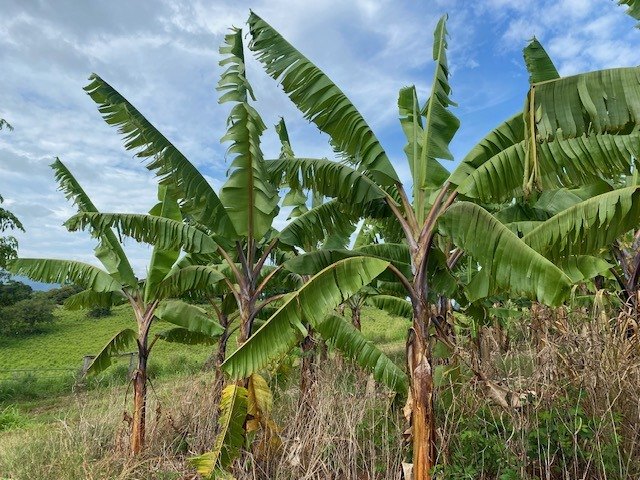
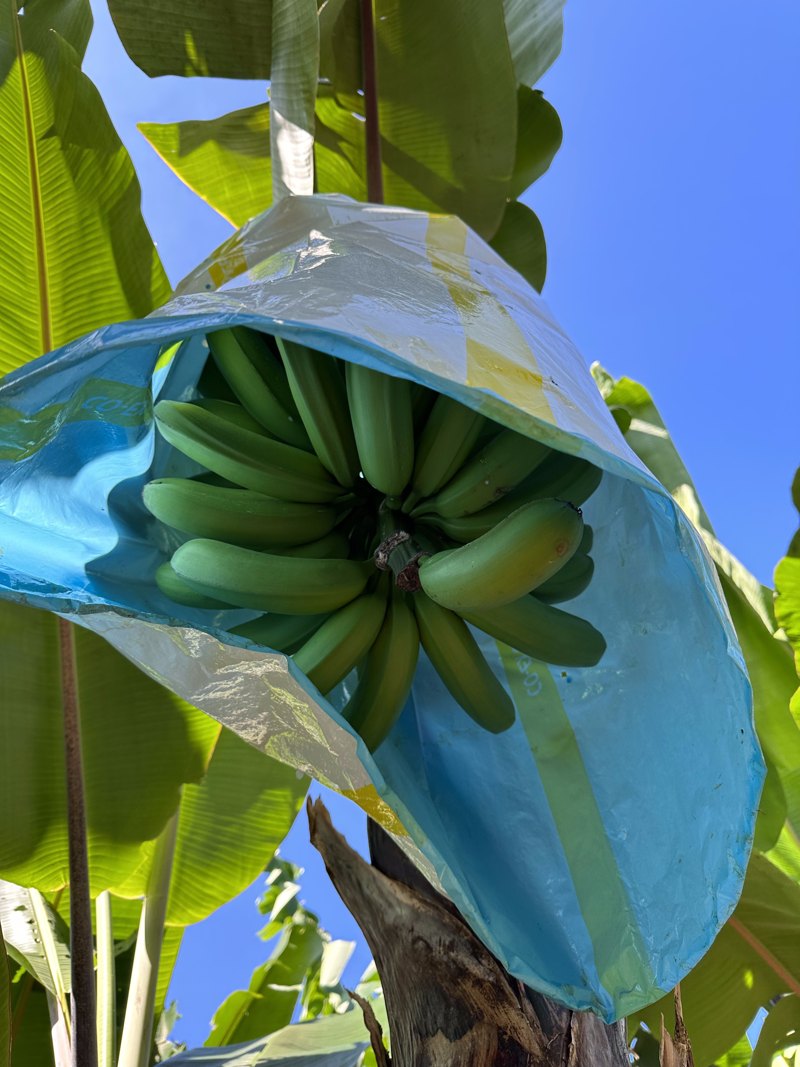
Tou Lee of Lee Agriculture put TBS in at planting in 2025, on red volcanic soil at Wangan. Cavendish.
Early days — but establishment and vegetative growth are both strong.
His accountNew plantings. Belt-spread along the row line at 3 m³/ha before planting. Most efficient over area, and the method used in the Queensland trial.
Established blocks. Work into a shallow channel in a circle around the root zone. Slower, but it puts the product where the feeder roots are without disturbing the stool.
The Black Stuff is a soil conditioner. It is not registered as an agricultural chemical product, and nothing here is a claim that it controls, prevents or treats any plant disease.
We have run trials on ground affected by Tropical Race 1 and Tropical Race 4 and we publish all of them. What those trials record is plant growth and health where the product was applied. Read them and judge for yourself.
Break clumps up before loading and agitate the hopper. Clumping is not a quality fault — it is a natural product in a humid climate. For auger spreaders, keep the weight-to-volume ratio at 90/100 or less, or use a belt spreader.
