A naturally occurring humate from a single volcanic deposit on the Atherton Tablelands. No chemical activation, no additives, no manufacturing.
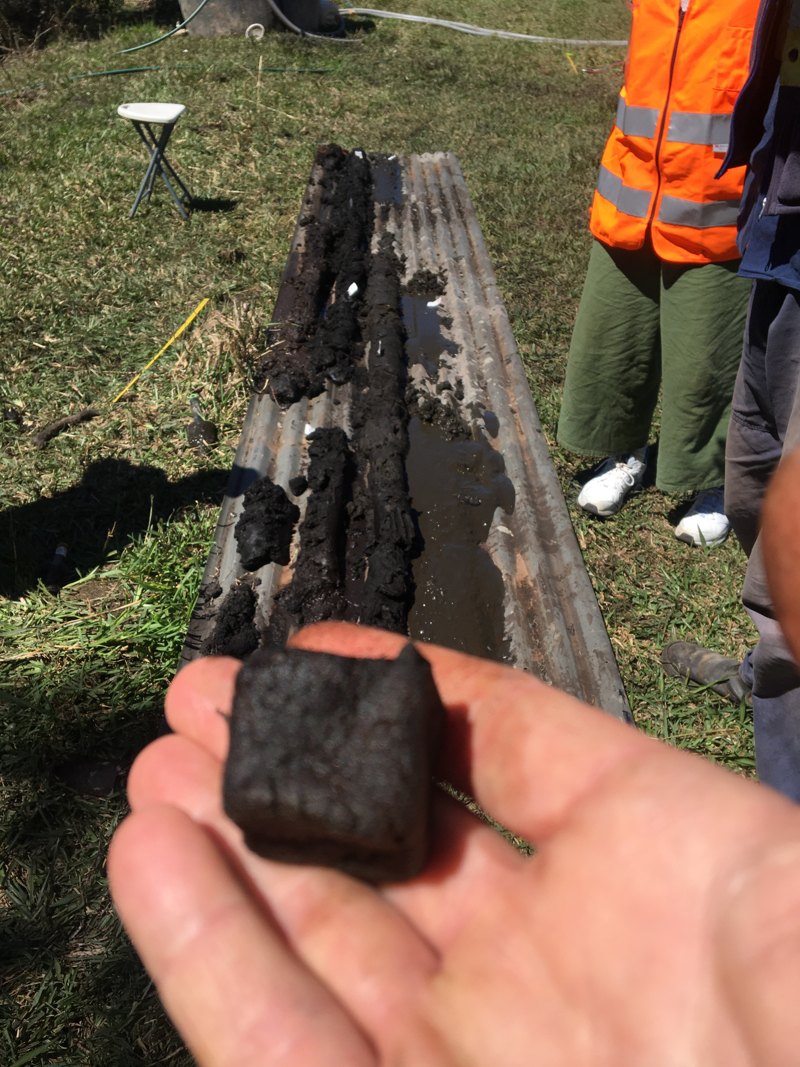
Humates are what is left when organic matter breaks down over a very long time without oxygen. Plant material accumulates under standing water, gets compressed, and the humic and fulvic acids concentrate.
The Black Stuff formed that way in a volcanic maar on the Atherton Tablelands, over tens of thousands of years. What makes it unusual is that the humic acids stayed available. Nothing has to be done to activate them.
It is not a fertiliser. It is a soil conditioner. It changes how your soil behaves — how much water it holds, how long it holds your fertiliser, and most importantly how well the biology in it works.
Most humate on the Australian market is manufactured. Brown coal is ground to dust and treated with a strong alkali to strip out the humic acids. It is a harsh process and it does not reliably activate what it releases. The result is highly concentrated, highly soluble — and it moves. Some fertigation programmes reapply it fortnightly.
The Black Stuff is applied once and stays. In trials it has been found present and active five years on. It is lost by being physically removed — washed off in a storm, blown off in a dust storm — not by breaking down.
Cross-check before publication: the comparison against leonardite-derived humates is documented in the Krakatoa Mine Sale materials (MVP 3) and should be the source for this section.
Physically — binds fine particles into crumbs, improves structure and aeration, lifts water-holding capacity, reduces cracking and run-off.
Chemically — holds soluble fertiliser in the root zone instead of below it, buffers pH, chelates metal ions so roots can reach them.
Biologically — feeds the microbial life that makes soil more than dirt; supports root growth and germination.
It is a soil conditioner and plant bio-stimulant that improves the physical, chemical and biological condition of soil. A long-lived amendment — in trials, still present and active five years after application. A carrier and holder of water and applied nutrients in the root zone.
It is not a fertiliser — it supplies very little N, P or K in its own right. It is not a soluble product needing frequent reapplication. And it is not a registered agricultural chemical product — not a fungicide, not a pesticide. Nothing on this site is a claim that it controls, prevents or treats any plant disease.
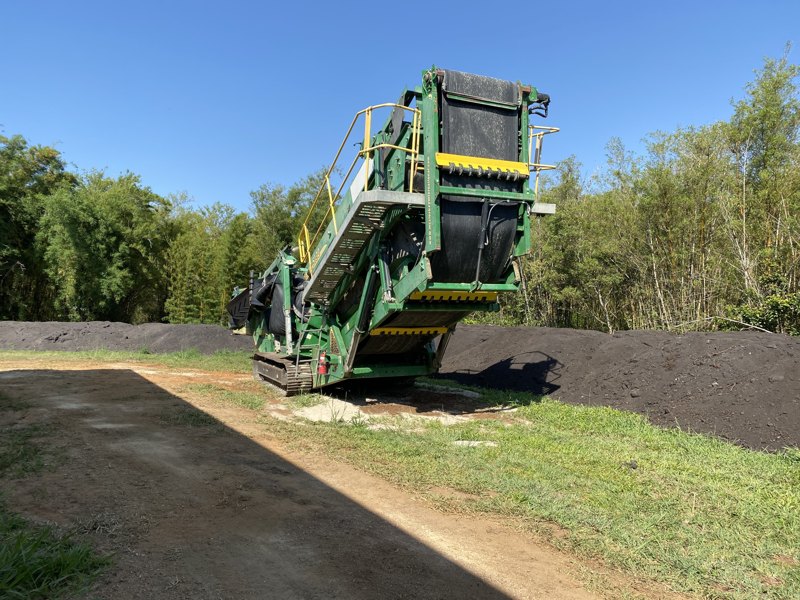
Acidic — about pH 4.5. Treat as required.
Never apply directly onto plants.
Dry product makes a fine dust. P2 mask, sealed goggles, gloves and long sleeves. Work upwind.
Starting points. Adjust with local agronomic advice and soil tests.
| Where | Rate | How to place it |
|---|---|---|
| Horticulture — fruit, nuts, vines | 3–5 m³/ha | Evenly over the root zone, then incorporate or cover. Or trench at the edge of the root zone, apply and cover. |
| Broadacre and general cropping | 3–5 m³/ha (start at 3) | Evenly over the root zone, then incorporate or cover. |
| Turf and pasture | 3–5 m³/ha | Work into the soil at renovation or before sowing. |
| Garden beds | 0.3 litres per m² | Between rows or around the root zone; work in and cover. |
| Pots | 0.5–1 litre per pot | Around the edge of the pot, worked in — not against the stem. |
| Seedling mix | 15% by volume | Blended with composted material and sand. |
Break up clumps first. Side-throw or auger spreaders work best. Never onto the plants.
Cover with mulch or soil straight away, or incorporate it.
Water in well to rehydrate it and activate it in the soil.
Note batch number, rate, area and date. Leave an untreated strip to compare.
| If this happens | What to do |
|---|---|
| Too much dust when spreading | Spread in low wind or early morning, lightly moisten the load, keep the cab closed, full PPE. |
| Clumps bridging in the bag spout or hopper | Break up clumps before loading and agitate the hopper. Clumping is not a quality fault. |
| Water beads up and runs off the product | It has dried out. Rehydrate with repeated light waterings until it takes up moisture. |
| Product blown or washed off the area | It was left uncovered. Always cover after spreading, and reapply over what was lost. |
| Colour or texture differs from the last load | Normal. It is a natural product with no additives, so batches vary. Recalibrate the spreader. |
| No visible response in the first few weeks | Expected. It works on the soil, not the leaf. Judge it over seasons against your untreated strip. |
Apply directly onto plants · leave it uncovered · leave it un-watered · cut water or fertiliser in one step — reduce gradually and watch the crop.
One page. How much to apply, the four steps, safety, storage, and the things that go wrong.
Source: The Black Stuff — Quick Reference, Edition 1, August 2026. Designed to be printed and left in the ute.
The Black Stuff is a natural product with no additives and there is variability between batches. Refer to our published ranges and test methods.
Figures are drawn from 21 laboratory reports across 2004–2025, normalised to a consistent basis: IHSS fractionation for humic substances, Mehlich 3 sum-of-cations for exchange capacity, fresh deposit material.
Two fractionation methods are in common use and they are not comparable. The California CDFA method reports higher humic acid than IHSS. Any humic acid figure — ours or a competitor's — means nothing without the method stated beside it.
Refer to the pack or delivery docket for the analysis of the batch supplied. Record the batch number: it is what ties a result back to a delivery.
| Parameter | The Black Stuff | Leonardite benchmark |
|---|---|---|
| Humic acid (IHSS) | 11.3% Section A average to 32.3% premium horizon | 10–30% typical |
| Fulvic acid | 0.27–4.8% | 1–5% typical |
| Humin | ~62.9% | 40–70% typical |
| Total organic carbon | 27.0–37.8% | 20–35% typical |
| Total organic matter | 46.0–64.2% | 40–65% typical |
| pH (1:5 H₂O) | 4.46–4.47 | 3.5–5.5 typical |
| Conductivity | 0.11–0.23 dS/m | 0.5–2.0 dS/m typical |
| Origin | Pleistocene–Holocene biogenic peat → humate, freshwater lake bed | Tertiary lignite oxidised brown coal |
| Source | Lynch's Crater, Queensland | Northern Hemisphere lignite seams USA, Germany, India, China |
| Processing | None — mined, screened, sold | Alkali extraction |
Source: TBS vs Leonardite Average Values Summary Table, 27/04/2026. TBS figures are averages and ranges from laboratory analyses across multiple horizons of the primary deposit, 2004–2025.
On humic acid we are in the pack, not ahead of it. Section A material averages 11.3% against a leonardite benchmark of 10–30%. Only the premium horizon, at 32.3%, reaches the top of the global range. Anyone selling you humate on a headline humic acid number should be asked which horizon it came from and which method measured it.
Where the real differences are:
That is a better argument than a bigger number, and it survives scrutiny.
Every heavy metal tested sits substantially below European fertilising product limits (EU Regulation 2019/1009, PFC 6) and below Australian NEPM investigation levels. Chromium VI was not detected. On most elements we also sit at or below the typical leonardite range.
It is an unusual thing to publish. It is also the first question a serious buyer asks about an imported leonardite, and the answer here is a good one.
| Element | TBS mg/kg | Leonardite typical | EU limit |
|---|---|---|---|
| Arsenic | <0.5 | 1–10 | 40 |
| Cadmium | 0.10 | 0.1–1.0 | 1.5 |
| Chromium | 12 | 5–30 | Cr VI not detected |
| Copper | 4.8 | 5–25 | 300 |
| Mercury | 0.08 | <0.1 | 1 |
| Nickel | 1.3 | 5–20 | 50 |
| Lead | <0.5 | 5–20 | 120 |
| Zinc | 12 | 20–100 | 800 |
The Black Stuff is not classified as hazardous under GHS. No signal word, no pictograms, not a scheduled poison, not dangerous goods for transport. It is a natural organic material and it is not toxic.
The moist product does not make dust. Handle it normally. Ordinary work clothes and gloves are enough.
Dried humate makes a fine, penetrating dust. This is the one situation that calls for protection — keep the product covered and it will not arise.
If you are spreading material that has dried: fitted particulate mask (P2 or better), sealed safety goggles rather than open glasses, gloves and long sleeves. Work upwind of the spreader, in low wind, early morning if you can. Keep unfiltered cabins out of the dust plume.
The product is mildly acidic, at about pH 4.5. Wash hands and face after handling and flush eyes with clean water if affected. That is the same advice you would give for handling most soil amendments.
Like any dry organic material it will smoulder if very high heat is applied directly. It does not readily ignite, and the practical risk in normal handling and storage is very low. Ordinary care around hot work is enough.
Version 2.2 · 9 pages · issued 31/08/2026 · not classified as hazardous.
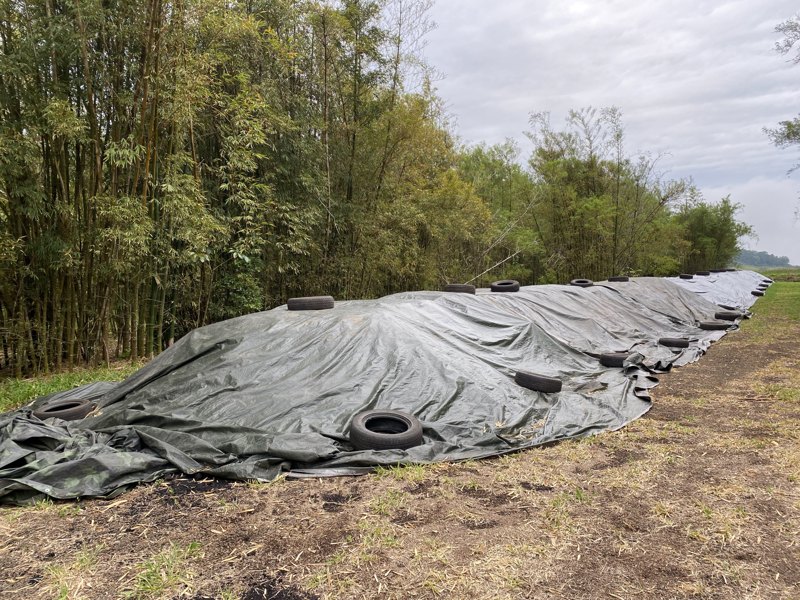
Cover your stockpile or close the bag spouts and you prevent the dust, stop wind and rain loss, and stop the product going water-repellent. One habit, three problems.
| First aid | |
|---|---|
| Inhalation | Move to fresh air |
| Skin | Rinse with water |
| Eyes | Flush with water for several minutes |
| Ingestion | Non-toxic. Rinse mouth. |
| Classification | |
|---|---|
| GHS | Not classified as hazardous |
| Poisons schedule | Not scheduled |
| Transport | Not dangerous goods. No UN number. |
| Environment | Biodegradable. Not toxic to soil or aquatic life. |
| Disposal | Non-hazardous organic waste; can go to compost or soil |
Source: Safety Data Sheet, The Black Stuff (Australia) Pty Ltd. Always read the safety directions on the pack and the SDS supplied with the batch.
Bulk prices are ex factory, Glen Allyn. Freight is quoted with the order.
| Format | Unit | Minimum order | Price | How to buy |
|---|---|---|---|---|
| 10 L pail (9 kg) | each | 1 pail | $29.95 incl. GST plus $24.95 postage, Australia-wide | Order online |
| Bulk bag | 1 m³ | 1 bag | $900 + GST per bag, ex factory | Phone or enquiry |
| More than 3 bags | — | — | Request a quote | Quote request |
| Loose bulk | per m³ | 20 m³ | $700 + GST per m³, ex factory | Quote request |
| Large volume | per m³ | 100 m³+ | By negotiation | Contact us |
At 3 m³/ha in loose bulk: about $2,100 + GST per hectare, ex factory.
At 5 m³/ha: about $3,500 + GST per hectare, ex factory.
Applied once. Not per season. Not per year. In trials it was still present and active five years after a single application, and it is depleted by physical removal rather than by breaking down.
Against a tree crop or an intensive horticultural block, that is the whole argument.
Bags are $900 + GST each, ex factory. There is no minimum — one cubic metre treats about a third of a hectare at 3 m³/ha, which is a proper trial strip on your own ground.
Over 3 bags, ask us for a quote. Freight and volume both come into it and we will do better than the list price.
Rate (m³/ha) × treated area (ha). Treated area means the ground the product lands on, not the total area of the block.
20 ha bananas at 3 m³/ha → 60 m³, bulk
6 ha vineyard, inter-row only → 9 m³, 9 bags
Trial strip, 0.5 ha at 3 m³/ha → 1.5 m³, 2 bags
1 cubic metre, spouts top and bottom, so you can fill a spreader without cutting the bag open.
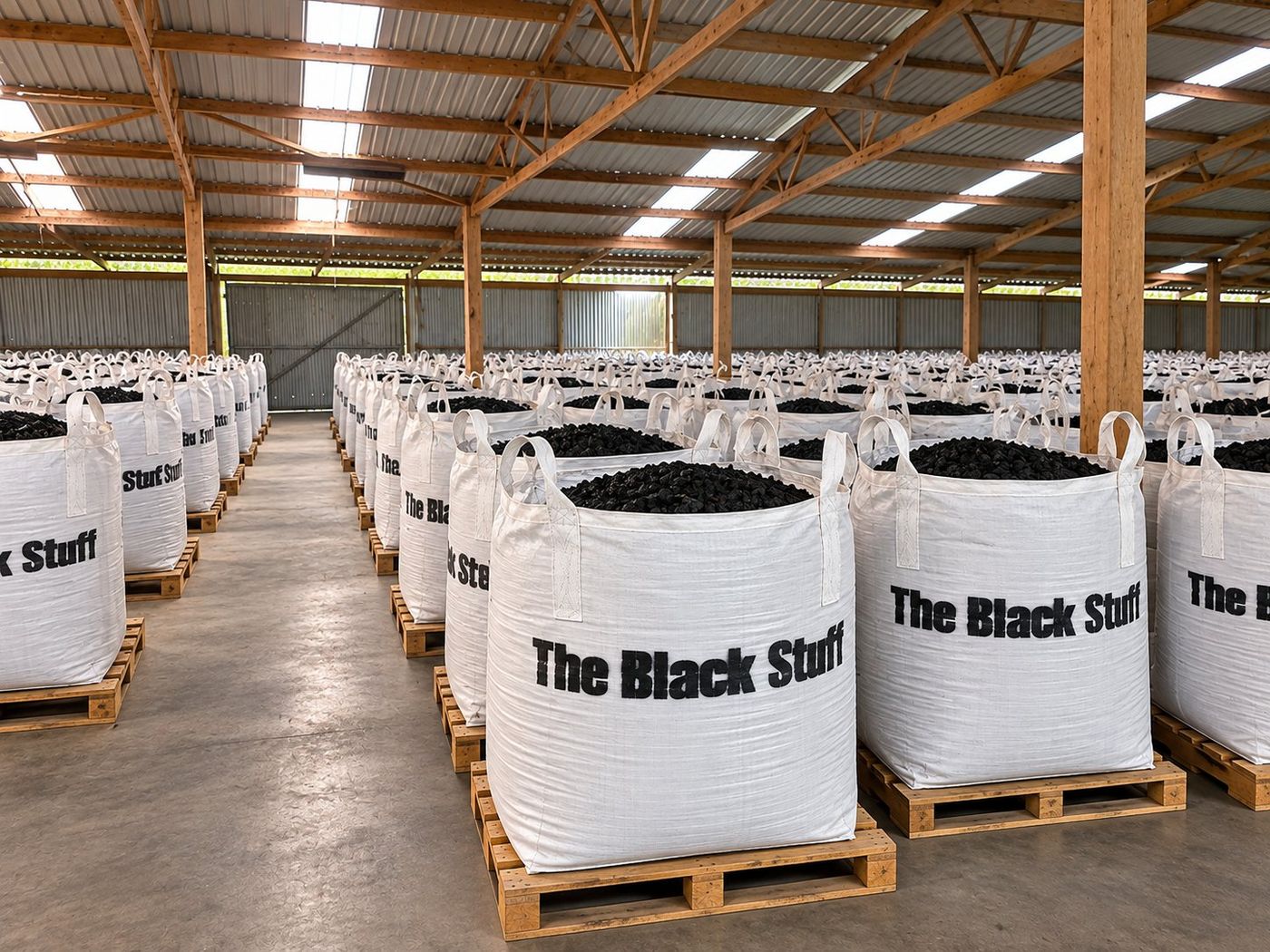
10 L pails: flat $24.95 postage, anywhere in Australia. Collection from Glen Allyn is free — choose it at checkout.
Bags and bulk: quoted separately with the order. It varies a good deal with destination and site access — the operation is at Glen Allyn on the Atherton Tablelands.
