Ask a North Queensland banana grower where Panama disease is now, and the answer has changed. It is no longer a line on a biosecurity map or a problem for someone else's farm. It's now all along the Tully River.
By Peter Topperwien, co-founder
Tropical Race 4 — TR4 — is a soil-borne strain of the fungus Fusarium oxysporum f. sp. cubense. It attacks the banana plant through its roots, blocks the vascular system, and kills it. There is no fungicide that controls it, no spray that cures it, and no way to clean it out of the ground once it is there: its spores survive in the soil for more than thirty years. A farm that gets TR4 does not recover from it. It learns to live around it, or it stops growing bananas.
This is the same disease (TR1), in a newer and more dangerous form, that wiped out the Gros Michel banana across Central America in the mid-twentieth century. The Cavendish that replaced it — now more than 95% of the world's banana exports — was chosen partly because it resisted the race of the day. TR4 is the strain that Cavendish cannot resist.
I do not need a journal paper to tell me how fast this moves. In 2018 I visited Muang Sing, in Luang Namtha province in Laos's far north, where Chinese-backed companies had planted Cavendish for export using planting material and soil brought down from Yunnan — ground where TR4 was already established. On some of those farms the disease was only just showing. Twelve months later every Cavendish plant in the district was gone — over 20,000 hectares.
That is the speed of it once it is in the soil: not a slow decline over many seasons, but a plantation standing one year and finished the next. It is the single clearest thing I have seen in this industry, and it is the reason I take the Tully numbers as seriously as I do.
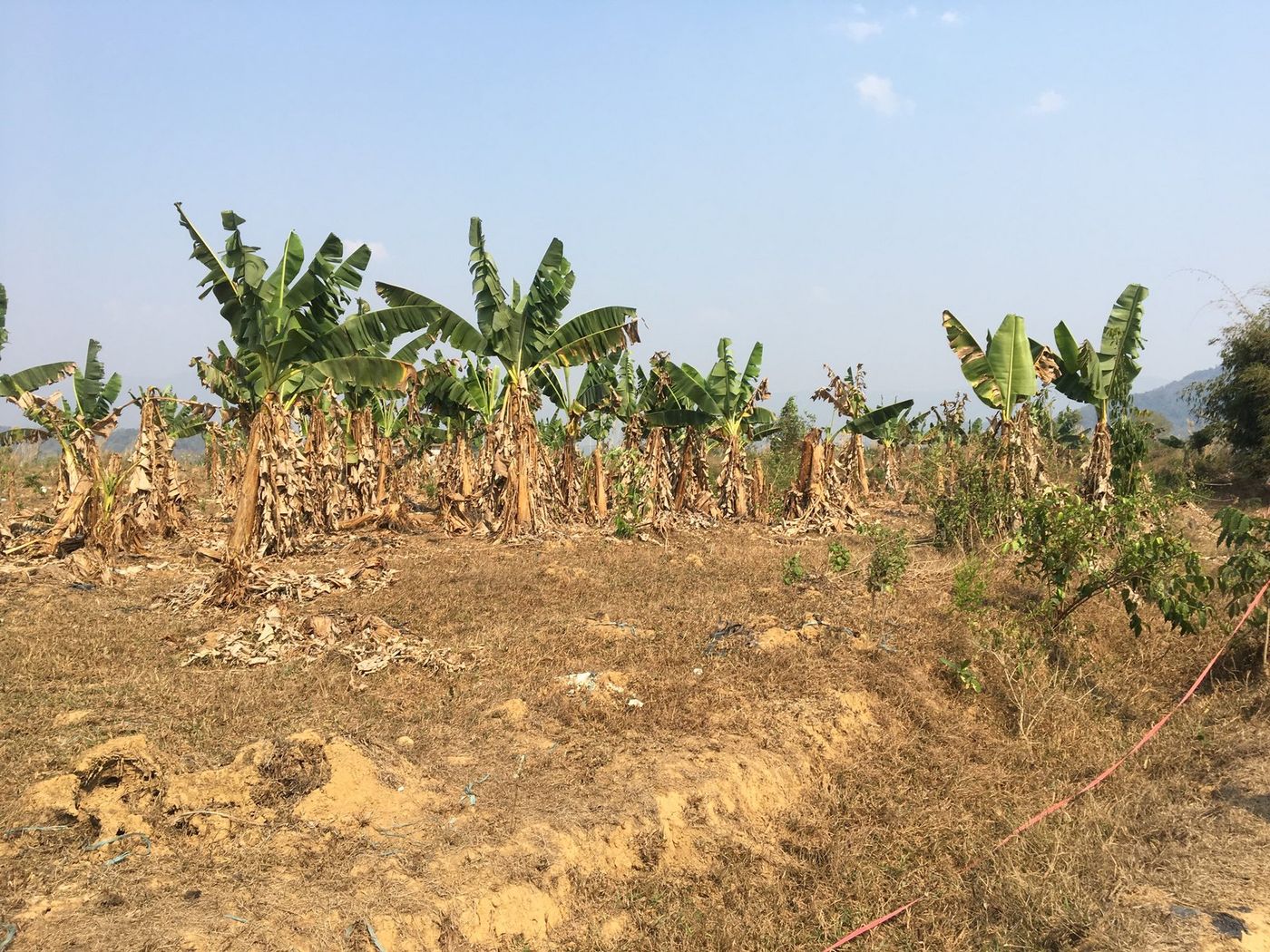
TR4 was first identified in Asia and moved through the region's plantations for years — reaching Laos, where it was formally confirmed in 2017 — before the wider world paid much attention. By 2013 it had crossed into the Middle East, confirmed first in Jordan and, over the years that followed, in Oman, Lebanon and Israel.
It reached Africa in the same period. Mozambique recorded the continent's first outbreak, on a large export plantation, in 2013; within a decade the fungus had spread more than 200 kilometres from that original site. In Uganda — one of the world's largest banana producers, and quite possibly its biggest consumer per head, where bananas are a daily staple rather than an export earner — reports now put Cavendish losses as high as 70%, and a colleague of ours is on the ground there now, inspecting the damage first-hand. It marks the moment TR4 stopped being a threat on Africa's doorstep and became a disaster inside it — in a country where bananas feed tens of millions, and where the susceptibility of its own staple cooking varieties is still being worked out.
Then, in 2019, TR4 did the thing the industry had dreaded for a decade: it crossed into Latin America, the heart of the world's banana export trade. Colombia declared a national emergency. Peru recorded it in 2021, Venezuela in 2023. It is now present in more than twenty countries across Asia, the Middle East, Africa, Latin America and the Pacific, and one assessment estimates that, without serious intervention, it could reach around 1.6 million hectares — roughly 17% of the world's banana-growing area — by 2040.
Australia has lived with this threat longer than most realise. TR4 reached the Northern Territory in the 1990s and effectively ended commercial Cavendish growing around Darwin. For twenty years the Queensland industry — which grows the overwhelming majority of Australia's bananas — kept it out.
That ended in 2015, when TR4 was confirmed on a farm in the Tully Valley. Since then, through some of the most disciplined on-farm biosecurity any Australian industry has managed, growers have held the line — containing the disease largely to the Tully district rather than letting it run north to Innisfail, fifty kilometres away and the country's single largest banana-growing area.
But “contained” is not “stopped.” By 2026 TR4 had been confirmed on an eleventh property, every one of them in the Tully Valley. The infection is spreading within the district it was meant to be boxed into. That is what a grower means now when they say it quietly: it's all along the Tully River.
There is no single answer to TR4, and anyone who offers one should be treated with suspicion. What the research and the hard experience point to is a layered defence, with no single layer sufficient on its own.
The first and most important layer is biosecurity: strict quarantine, clean machinery, controlled movement of soil and water. This is what has bought the Tully industry a decade. The second is genetics — resistant cultivars such as the QUT-developed QCAV-4, a modified Cavendish approved for commercial growing, which may in time give growers a plant that can stand in infected ground. The third is the ground itself: healthier, biologically active soil, and plants grown to be more resilient under pressure.
We have worked on that third layer. On a TR4-infected farm at Vang Vieng in Laos — a fifty-hectare plantation the Lao Department of Agriculture had verified as 100% TR4-affected and commercially finished — blocks treated with The Black Stuff and managed properly kept growing and carried fruit within eight months, while the untreated control was dead by the following January. The full trial is on our evidence page. To be completely clear about what that does and does not mean: TR4 was present throughout; nothing prevented infection. What the treated ground produced was resilience — plants that kept producing under a pressure that killed the untreated ones.
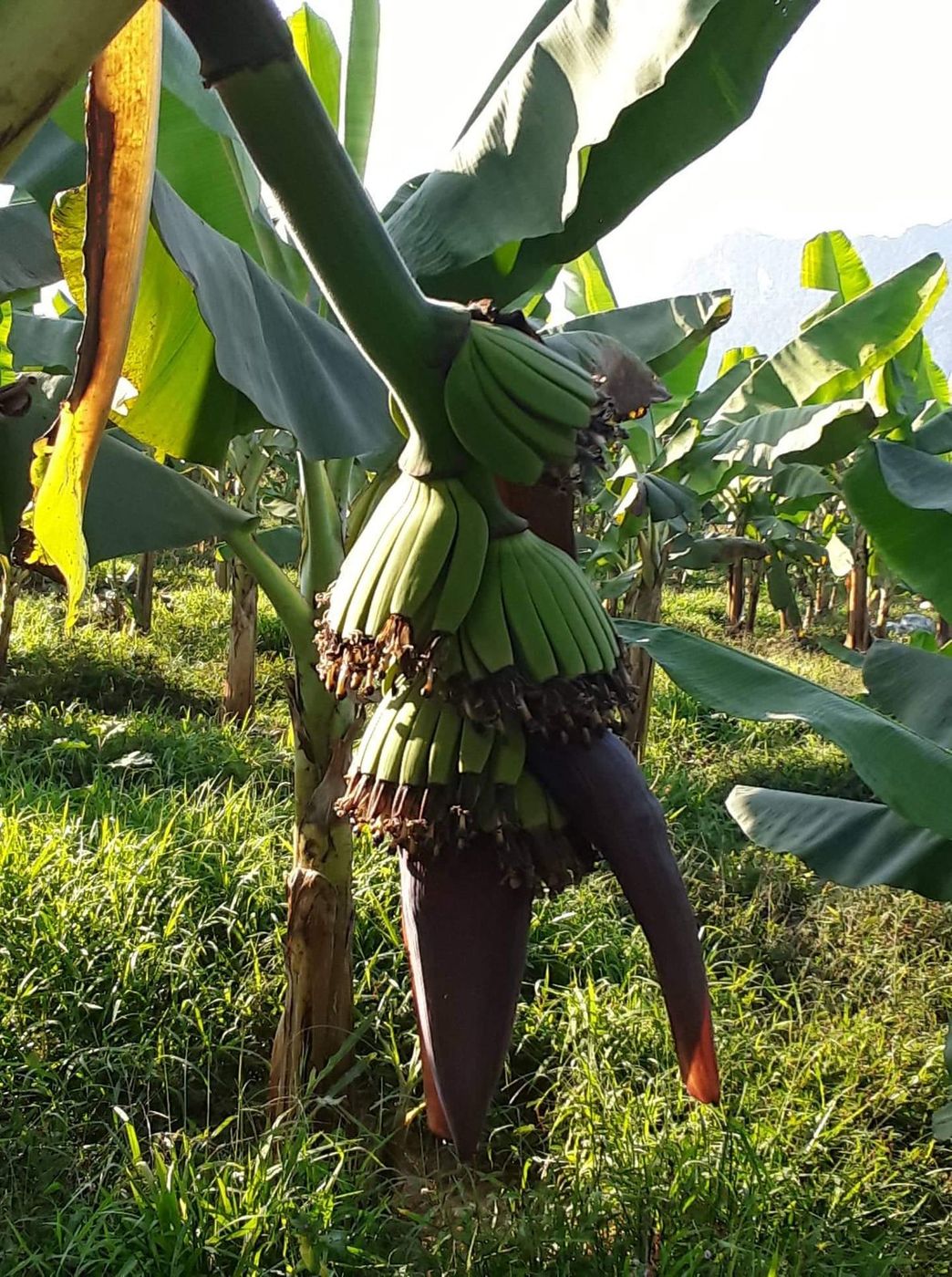
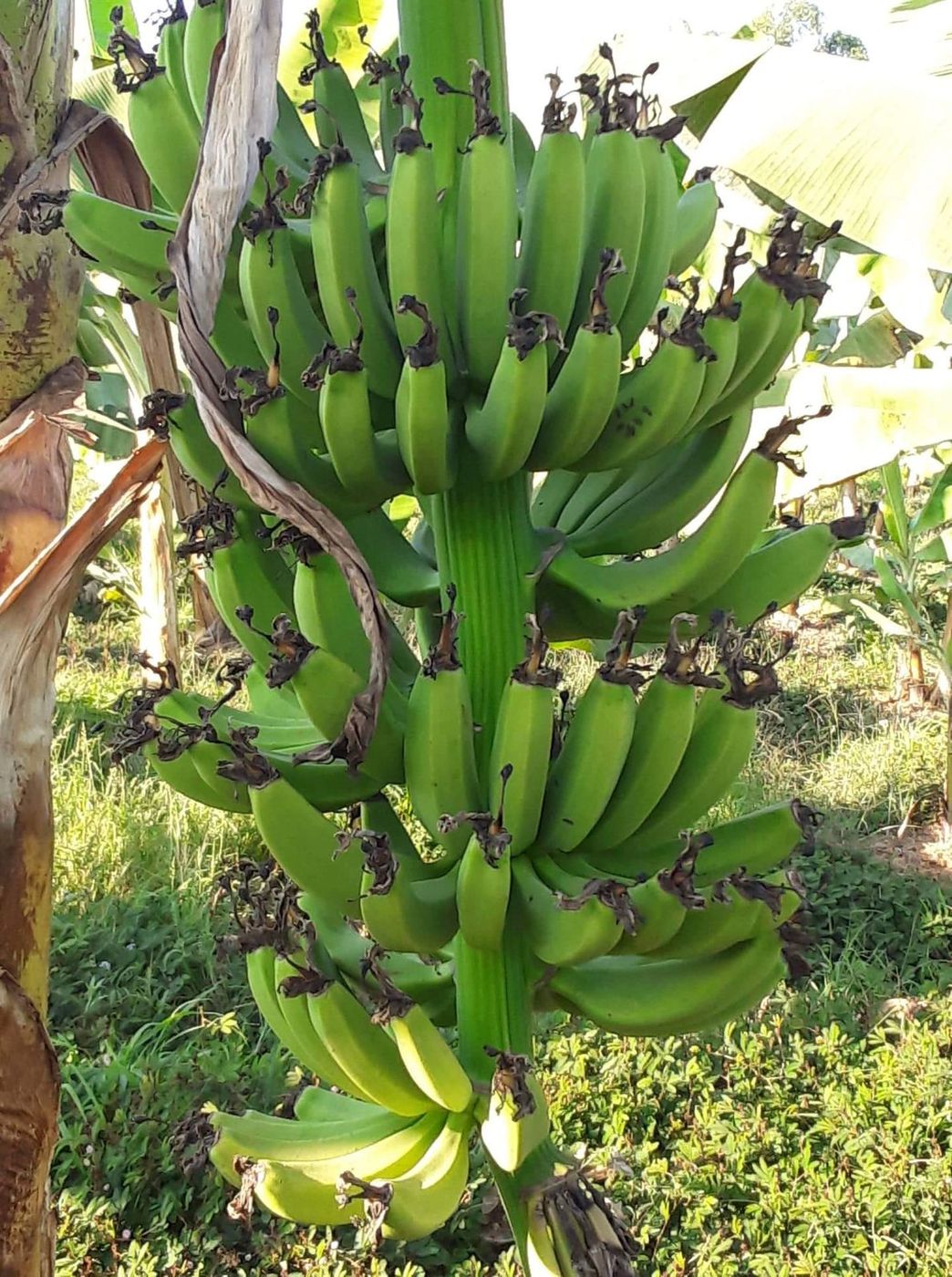
TR4 is not going away — not from Tully, not from Latin America, not from the world's banana soils. The fungus is in the ground for good. The question for every grower in its path is no longer how to keep it out, but how to keep growing once it arrives: biosecurity to slow it, resistant plants to stand in it, and soil built to carry a crop through it. Those three things together are the difference between a farm that adapts and a farm that closes.
It's all along the Tully River now, and its spread is inevitable.
See the TR4 trial data Talk to us
The Black Stuff is a soil conditioner. It is not a fungicide, it is not registered as an agricultural chemical product, and it is not a treatment for Tropical Race 4. Drawn from The Black Stuff's Lao TR4 (Vang Vieng, 2019–2020) and East Palmerston (2021–2026) trial reports and from field observations in northern Laos; the Lao trial was conducted in co-operation with the Lao PDR Department of Agriculture.
