Three rates, one untreated control, one season. Yield rose with every increase in rate.
Keo Keomoungkhoune grows CR203 wet season rice at Tha Ngon, on sandy loam at pH 4.4, under 2,200 mm of annual rainfall. The crop goes to Lao Beer Co for Beer Lao. The farmer had been growing rice on the same ground for five years, wet and dry season, and wanted to know whether the product would lift yield enough to pay for itself.
The farm is divided into irregular flood-irrigated lots separated by walkways. The Black Stuff went onto three lots at three different rates. A fourth lot was left untreated as the control.
Planted July 2019, harvested October 2019. Ordinary local practice throughout, identical across all lots except for the product. NPK applied at planting and again a month later, on every lot including the control.
Rice from each lot was kept separate, weighed and assessed for quality.
| Lot | Area | Applied | Rate | Yield | Increase |
|---|---|---|---|---|---|
| 1 | 462 m² | 50 L | 0.108 L/m² | 105 kg | 45% |
| 2 | 714 m² | 100 L | 0.140 L/m² | 175 kg | 56% |
| 3 | 1,056 m² | 150 L | 0.142 L/m² | 280 kg | 69% |
| 4 | — | Control — none | — | — | Baseline |
Gross farm yield went from 5 bags in 2018 to 8 bags in 2019 — 350 kg to 560 kg. Quality was assessed as outstanding, Grade A.
No further product was applied after the 2019 trial. Two years later the grower reported wet and dry season yields running 50% above his baseline, in seasons affected by water shortage.
That is the persistence claim tested in the field rather than in a soil sample: three years, one application.
A clear dose response — more product, more yield, across all three rates. At 0.142 L/m² the increase was 69%.
A single-site commercial demonstration on one farm over one season, with a follow-up grower report two years later. Lot areas differ and the treated lots were not replicated, so this shows a consistent direction of effect rather than a statistically validated magnitude. The PPC trial was designed to do that job.
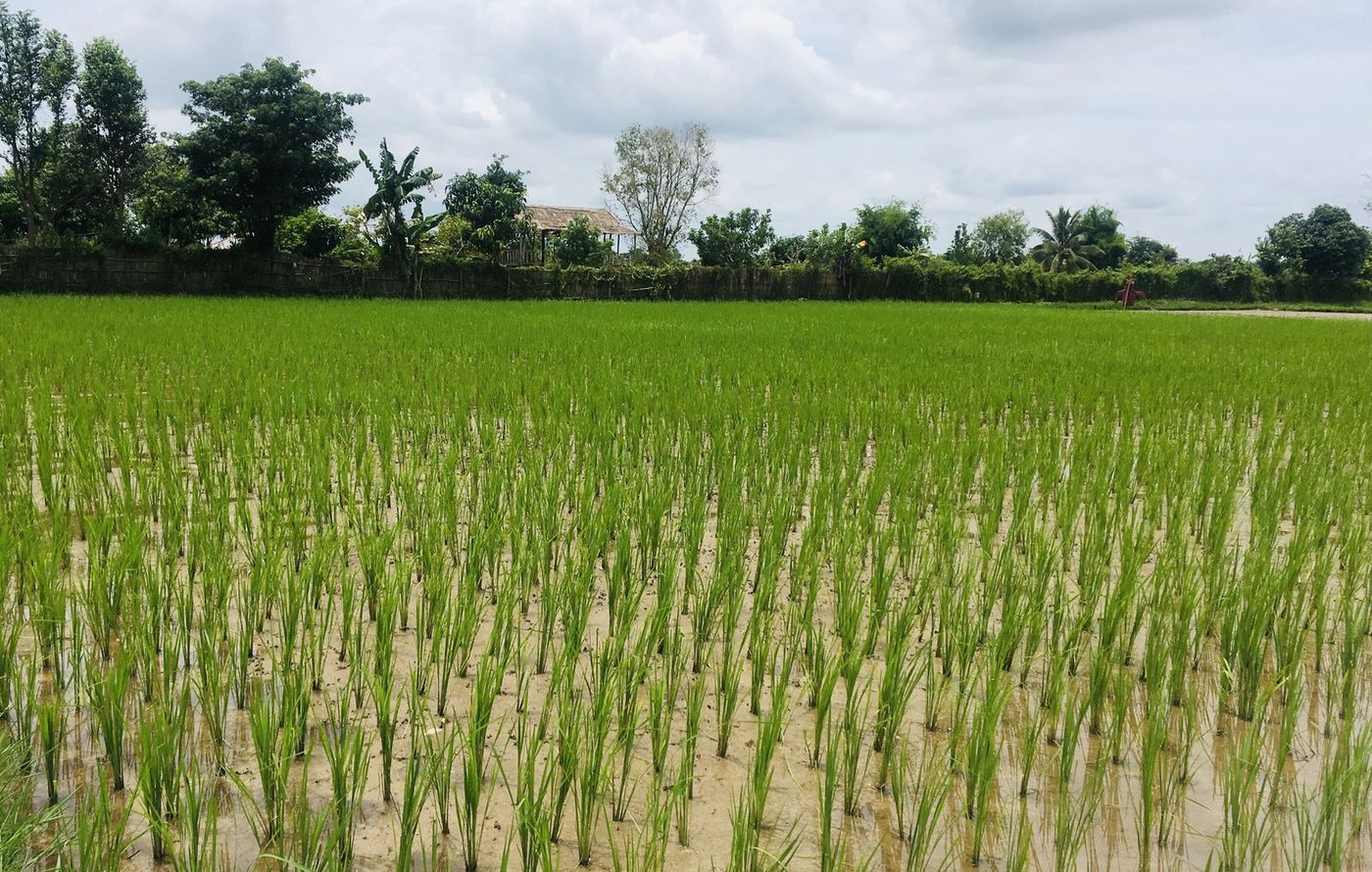
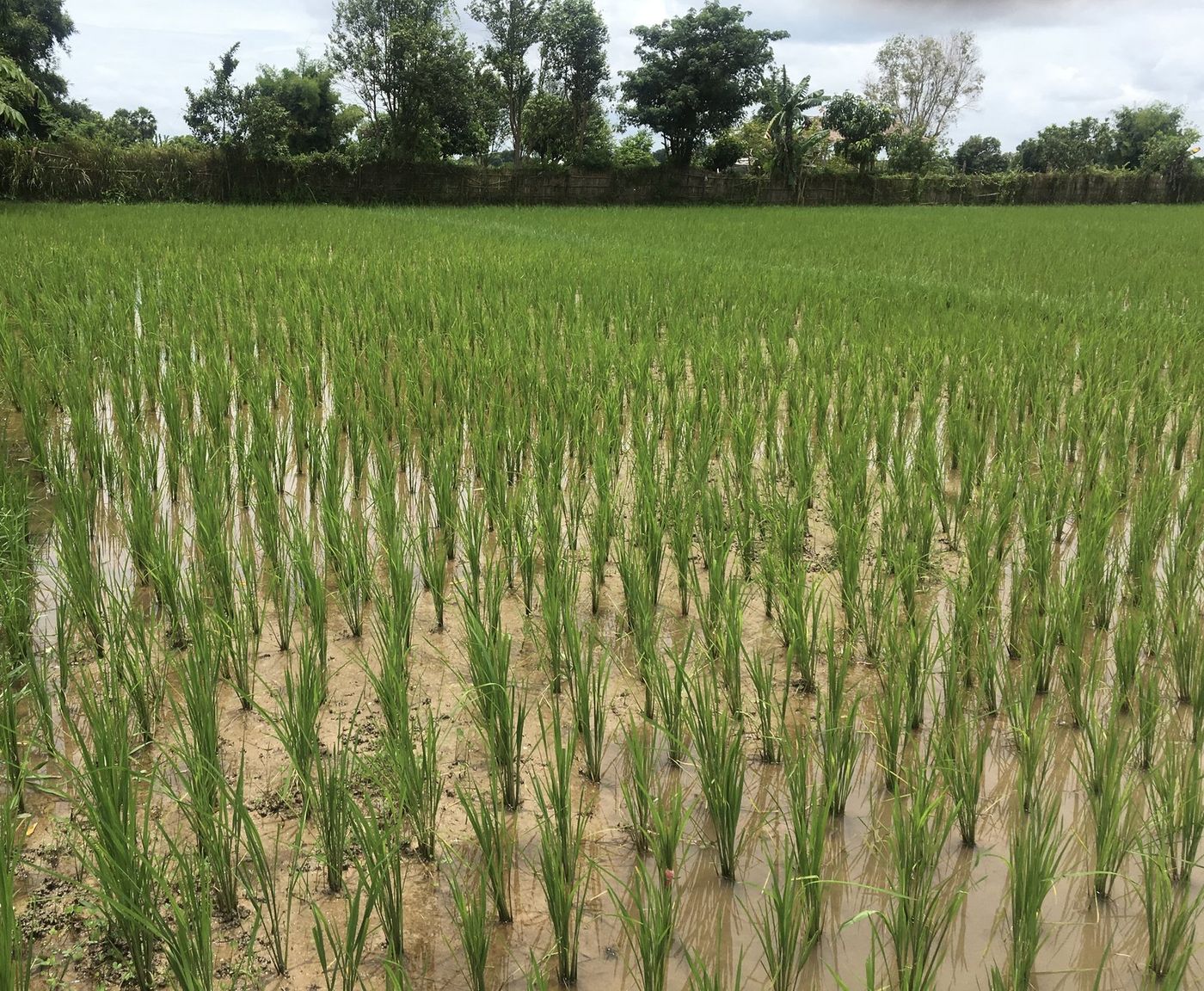
Wet season rice, Lao PDR 2019 · 5 pp. The Black Stuff is a soil conditioner and is not a registered agricultural chemical product. Nothing in this report is a claim that it controls, prevents or treats any plant disease.
Grower — Keo Keomoungkhoune
Location — Tha Ngon, Lao PDR
Crop — CR203 wet season rice
Soil — sandy loam, pH 4.4
Rainfall — 2,200 mm annual
Irrigation — flood
Planted — July 2019
Harvested — October 2019
Follow-up — 2021
In the original reports the product is called NSA Wilt Stop. Lao growers found that hard to say and called it Foon Dam — the black stuff. The name stuck, and the company took it on.
