Half the usual water. The treated lots got no fertiliser at all and went up 30%. The control got three NPK applications and went down 20%.
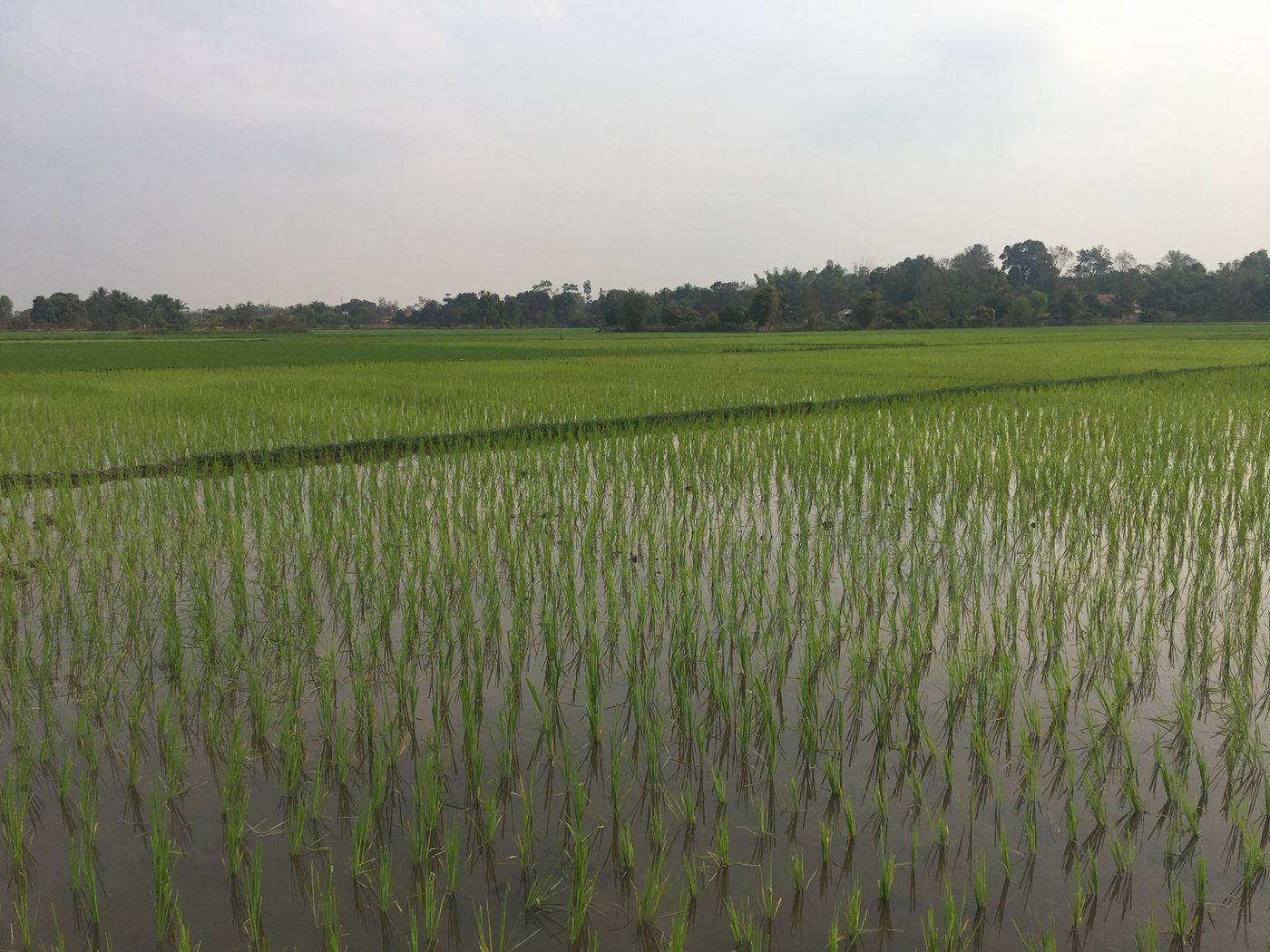
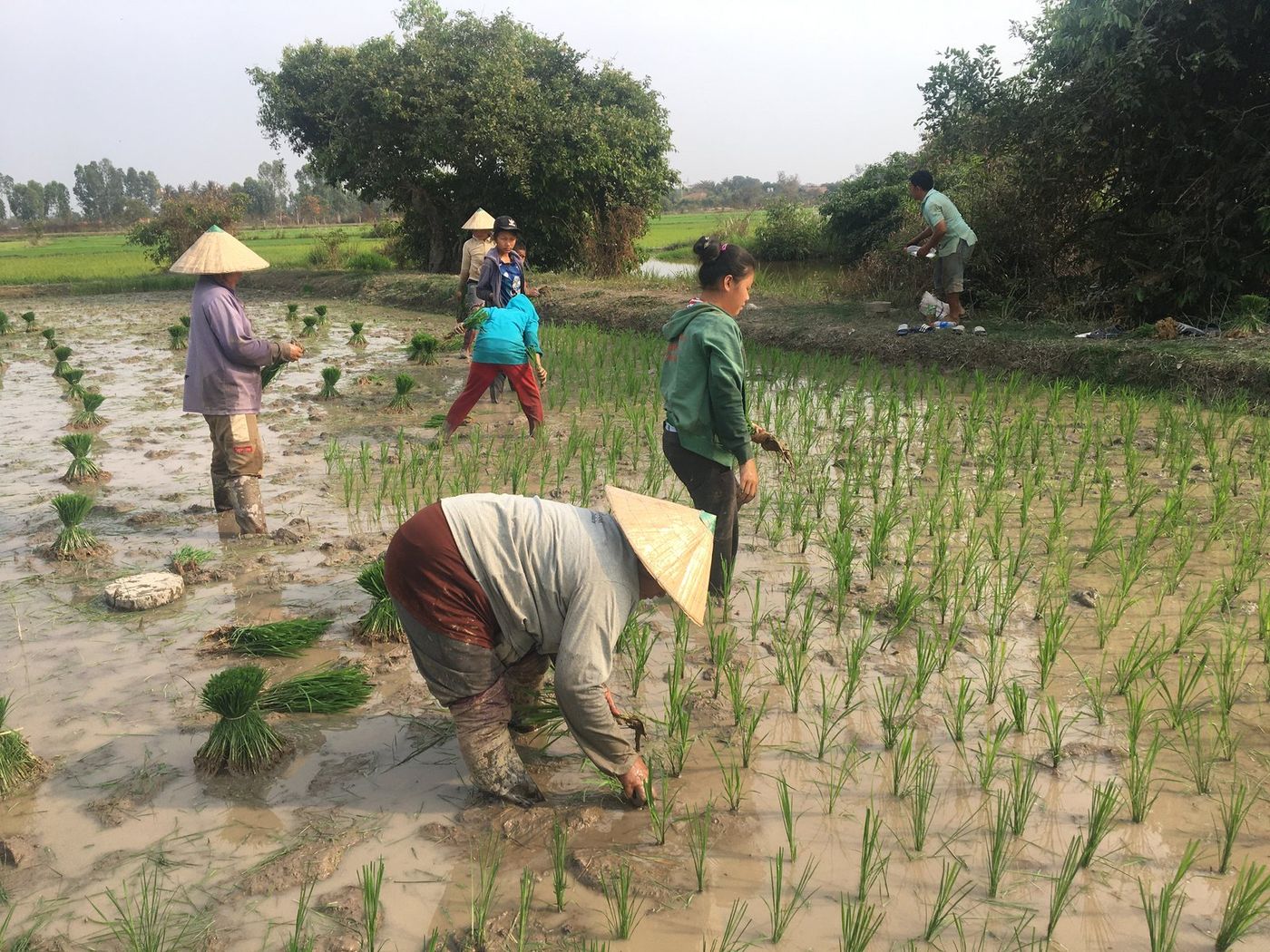
Mr Sang grows Lao sticky rice at Tha Ngon on sandy loam at pH 4.4. The 2020 dry season was a drought — about half the water available compared with a normal year.
That accident of timing makes this the most interesting trial in the set. Water holding is the first thing a humate is supposed to do, and this season put it to the test.
The farm is divided into lots of roughly 40 m × 40 m, flood irrigated. The Black Stuff was spread on three lots before planting at 1, 2 and 3 tonnes per hectare. Other lots were left as controls.
The treated lots received no fertiliser. The control lots received three applications of NPK.
Planted January 2020, harvested April 2020.
| 2019 | 2020 | Change | |
|---|---|---|---|
| Treated (no fertiliser) | 1,400 kg | 1,820 kg | +30% |
| Control (3 × NPK) | 1,400 kg | 1,120 kg | −20% |
Quality of the trial rice was assessed as outstanding.
The grower also reported a marked increase in fish, frogs and worms in the treated lots, and that the rice there was stronger, greener and healthier. Lot 3 — the highest rate — produced much more rice.
A 50 percentage point spread between treated and control, in a drought year, with the treated lots carrying no synthetic nutrition and the control carrying three passes of it.
That is the water-holding and nutrient-holding argument doing exactly what it is supposed to do, in the season when it counts.
Harvest from the individual treated lots was not kept separate — the crop was harvested in a rush ahead of severe storms — so the three rates cannot be compared against each other here. The treated-versus-control comparison stands. Year-on-year comparison also carries ordinary seasonal variation beyond the treatment.
Dry season rice, Lao PDR 2020 · 7 pp. The Black Stuff is a soil conditioner and is not a registered agricultural chemical product. Nothing in this report is a claim that it controls, prevents or treats any plant disease.
Grower — Mr Sang
Location — Tha Ngon, Lao PDR
Crop — Lao sticky rice
Soil — sandy loam, pH 4.4
Rates — 1, 2 and 3 t/ha
Treated lots — no fertiliser
Control lots — 3 × NPK
Planted — January 2020
Harvested — April 2020
The grower's own observations are important. Biological response in a flooded rice system is not something a soil test picks up, but a farmer walking his own lots notices it.
