Red sandy country, a long establishment phase, and a crop where colour and finish decide the price. One Mareeba block gives a direct treated-against-untreated comparison.
Red sandy soils drain fast. Water moves through the profile quicker than the root zone can use it, and soluble fertiliser goes with it. On a tree crop that is money leaving the block every time it rains or you irrigate.
The effect shows up as pale, anaemic foliage and trees that take longer than they should to come into production. It is a holding-capacity problem before it is a nutrition problem.
It binds fine particles into crumbs, lifts water-holding capacity, and holds soluble nutrient in the root zone instead of below it. Applied once, in trials it was still present and active five years on.
On tree crops that matters more than on an annual, because you are treating ground the tree will occupy for decades.
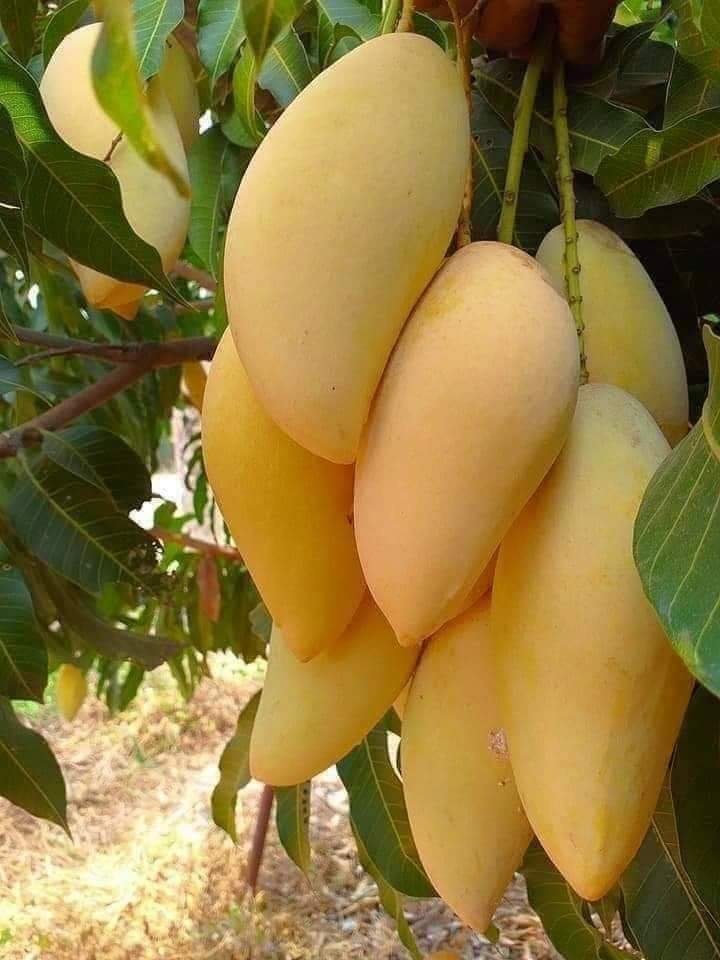
At 3 m³/ha in loose bulk, about $2,100 + GST per hectare, ex factory. Applied once, not per season.
Red sandy soils at Mareeba. The lower the natural organic matter, the more there is to gain.
Differentiation was visible within eight months on established trees.
John Jennings, Mareeba QLD. 300 trees planted 2020, a further 150 in 2023 — both lots identical before treatment. 2 m³ applied July 2025 to the original 300. Clear visible differentiation within eight months, recorded March 2026. · Read the full story
Starting points. Adjust with local agronomic advice and a current soil test.
| Situation | Rate | How to place it |
|---|---|---|
| New plantings | 3–5 m³/ha | Into the planting hole and the surrounding root zone, then cover. Never against the stem. |
| Established trees | 3–5 m³/ha | Evenly over the root zone, then incorporate lightly or cover. Or trench at the dripline, apply and cover. |
| Trial strip | 1 m³ treats about a third of a hectare | Treat part of a block and leave the rest. That is how the Mareeba comparison was made. |
Tell us the area and where you are, and we will come back with a competitive price.
